
 0
 0
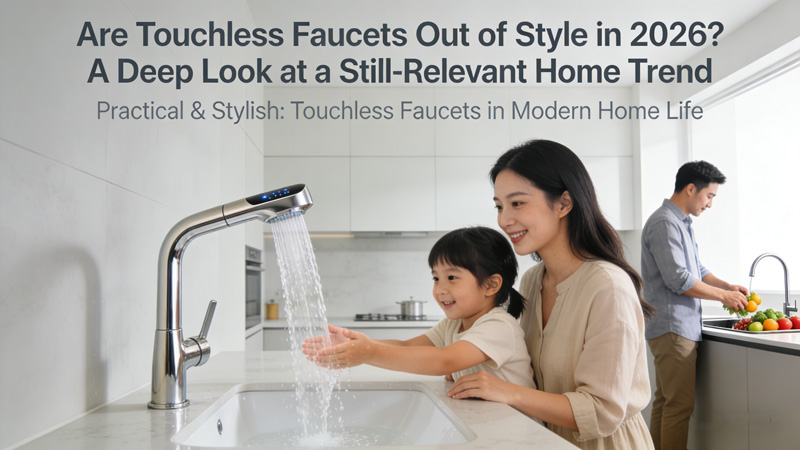
In 2026, touchless faucets are far from being a fleeting fad that came and went — yet the conversation about their “style” has shifted. When these high-tech fixtures burst into mainstream popularity in the 2010s and early 2020s, they were often touted as futuristic, luxurious, and hygienic. But as smart home technology becomes more commonplace, some homeowners are asking: Are touchless faucets still stylish, or have they become passé?
The short answer is no — they’re not out of style. But the story is richer than a simple yes or no. In many ways, touchless faucets have matured from novel gadgets to practical design features, and their perceived “style status” depends on context, design execution, and personal priorities.
1. From Novelty to Norm: The Evolution of Touchless Faucets
Touchless faucets first gained traction as luxury upgrades in high-end kitchens and bathrooms. Their appeal was clear: wave your hand — water flows. Especially during the COVID-19 pandemic, the hygiene benefits were front of mind. But as production scaled and prices dropped, they began showing up in mainstream homes and even commercial spaces like restaurants, offices, and public restrooms.
In 2026, consumers expect tech to be useful — not just flashy. In that sense, touchless faucets have graduated. They’re no longer something you install just to show off. Instead, they are judged on functionality, reliability, design coherence, and integration with smart systems.
2. Why People Still Choose Touchless Faucets
While some trends come and go, touchless faucets continue to have enduring appeal for several reasons:
A. Hygiene and Health Mindshare Still Matters
Even as the pandemic recedes from immediate headlines, people remain conscious of germ transmission. Kitchens and bathrooms are places where cleanliness feels especially important. Touchless faucets reduce contact with handles that can accumulate grime — a simple but meaningful benefit in daily life.
B. Convenience in Everyday Use
No one household chore is glamorous, but eliminating the need to twist cold hands on a handle when cooking or bathing kids is undeniably convenient. For people with limited mobility or joint pain, touchless faucets are genuinely more accessible than traditional ones.
C. Smart Home Integration
In 2026, many homes are already equipped with voice assistants and connected appliances. Touchless faucets pair naturally with this ecosystem. Some models offer voice control or app settings for preferred water temperature and flow patterns — features that appeal to tech enthusiasts.
D. Water Efficiency
Many touchless faucets include auto-shutoff features that prevent water waste. With environmental awareness still rising, these functional benefits resonate with sustainability-minded buyers.
3. Style and Aesthetics Trends in 2026
To understand whether something is “out of style,” we have to look at aesthetic trends. Here’s how touchless faucets fit into current design sensibilities:
A. Minimalism and Seamless Design
Minimalist kitchens and bathrooms are still popular. Sleek, clean, uncluttered surfaces define many contemporary interiors. Touchless faucets, particularly streamlined models with hidden sensors and pared-down silhouettes, fit this aesthetic well. They don’t necessarily draw attention to themselves, which aligns with modern design preferences.
B. Blend of Form and Function
Today’s consumers are increasingly skeptical of style that only looks good. They want style that performs. Touchless faucets deliver on function without sacrificing design. High-end finishes like matte black, brushed brass, and warm metals further anchor them in current interior trends.
C. Smart, Subtle Tech
Unlike early smart products that broadcasted their tech with LEDs and gimmicks, current design trends emphasize subtle, embedded tech. Touchless faucets that conceal sensors and operate quietly feel more refined than the conspicuous “tech objects” of the past decade.
In this context, rather than being “out of style,” touchless faucets have become stylish in the right way — understated, purposeful, and modern.
4. Perceptions: Are People Tired of Them?

Some critics argue that touchless faucets feel impersonal or overly techy. In particular:
- Over-saturation: Early adopters sometimes feel that once-novel tech feels commonplace now.
- Sensor quirks: Poorly calibrated sensors can be frustrating — triggering water at the wrong time or failing when hands are too close/far.
- Maintenance concerns: Battery changes or electronics failures can deter some homeowners who prefer mechanical reliability.
These are real consumer perceptions. But they affect preference, not style status. A feature can be widely disliked yet still relevant and trendy; conversely, something can be loved but feel dated if it no longer matches broader design directions.
In the case of touchless faucets, most of the “tiredness” comes from experiences with lower-quality models or improper installation — not the concept itself.
5. Market Reality: Sales and Variety in 2026
Even without pointing to specific sales figures, the supply side tells a story:
- Major faucet brands continue to produce multiple touchless lines with updated designs.
- Mid-range and budget models are now common, making the technology accessible to a broader audience.
- High-end designers emphasize aesthetics just as much as sensors, blending tech with fine materials.
If a category were genuinely fading out, manufacturers would scale back offerings. Instead, we see expansion — a sign that touchless faucets remain commercially and culturally relevant.
6. So, Are Touchless Faucets “Out of Style”?
In 2026, the answer is nuanced:
Not out of style — just mature.
Early adopters may no longer gush about touchless faucets as futuristic novelties. But their usability, integration with smart homes, alignment with minimalist design, and continued consumer interest keep them firmly on the design map.
Rather than a trend that peaked and dropped off, touchless faucets have transitioned into a feature category — like energy-efficient lighting or integrated storage solutions. They’re valued for what they do, and appreciated as design elements that fit modern tastes.
7. How to Decide if a Touchless Faucet Is Stylish for Your Home
If you’re wondering whether a touchless faucet is a good choice for your space, consider:
- Design coherence: Does the faucet’s aesthetic match your overall style (modern, transitional, industrial, etc.)?
- Function needs: Do you appreciate hands-free use for cooking, kids, pets, or accessibility?
- Quality of the product: Higher-end models are more reliable and visually refined than cheap alternatives.
- Smart home ecosystem: If you already use connected devices, a touchless faucet can integrate well.
Style isn’t only what designers proclaim — it’s what feels right in your own home.
Conclusion: Touchless Faucets in 2026
Touchless faucets aren’t out of style in 2026 — they’ve simply become a normalized, thoughtful choice in modern homes. Their initial “wow factor” has mellowed into everyday appreciation for convenience, hygiene, and sleek design.
Rather than being relics of early smart-home hype, they are versatile, practical, and design-aligned products that continue to earn their place in kitchens and bathrooms. If style is judged by relevance, desirability, and fit with current aesthetics, touchless faucets are very much in vogue — just in a more subtle, established way than before.


Average Rating