
 0
 0
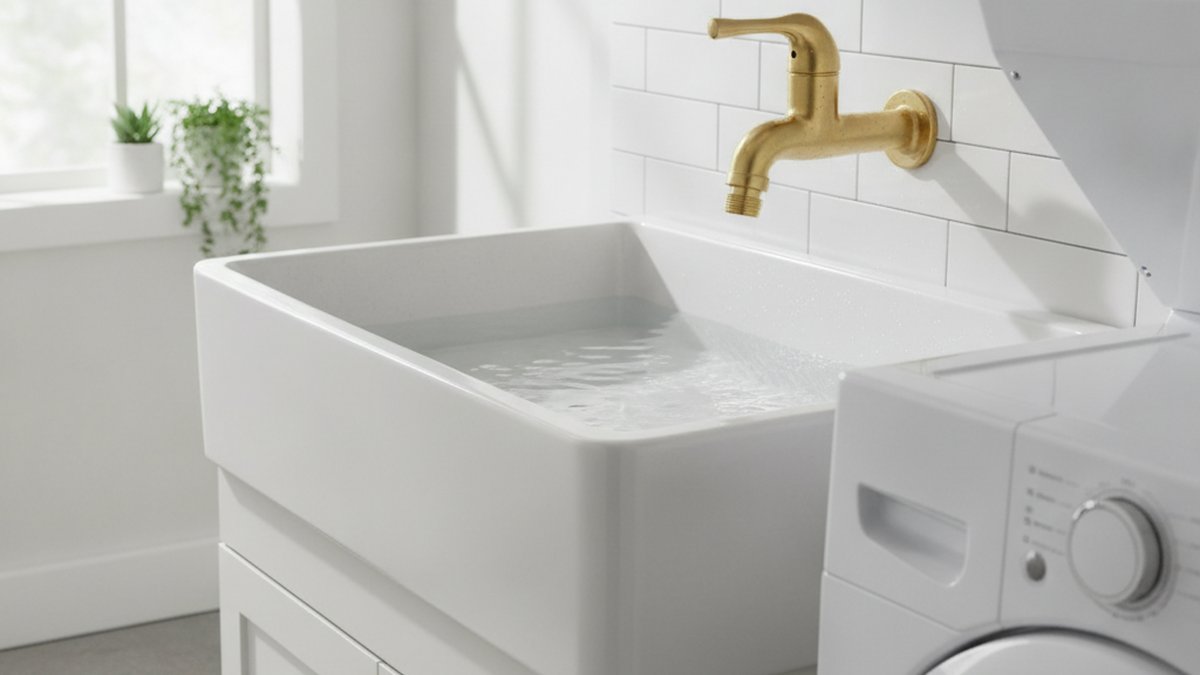
A brass tap utility faucet is a heavy-duty tap built specifically for utility sinks and rough-service areas — think laundry tubs, garage wash stations, basement slop sinks, and mudroom cleanup spots — where the fixture gets used hard, sees hot and cold water, and can’t afford to corrode or crack. If you’re shopping and trying to figure out whether solid brass is worth it over cheaper zinc-alloy or plastic-bodied taps, the short version is that brass wins on lifespan, repairability, and hard-water resistance almost every time. Below, we’ll walk through exactly when brass makes sense, what to look for on the spec sheet, and how to avoid overpaying for a fixture in a room where nobody’s judging the finish.
What Exactly Is a Brass Tap Utility Faucet — and How Is It Different From a Kitchen Tap?
A brass tap utility faucet is a tap made from solid brass (or brass-cored) designed for utility sinks rather than kitchens or bathrooms — meaning it prioritizes durability, high flow, and a threaded outlet for hoses over sleek styling. The core difference from a kitchen tap is intent: a utility tap is built to take abuse.
Where a kitchen faucet is engineered around a pull-down spray head, matched finishes, and looking good on an island, a utility tap is engineered around function. Most utility taps feature a taller, unobstructed spout to fit a bucket underneath, a hose-thread aerator or plain outlet so you can screw on a garden hose or washing-machine fill hose, and simple, rebuildable cartridges or compression stems that you can service for years. The body being solid brass is the whole point — it’s what lets the tap survive constant hot-water use, occasional freezing in an unheated garage, and the mineral scale that eats cheaper metals alive.
Utility taps come in two mounting styles you’ll need to match to your setup:
- Wall-mounted utility taps — the outlets thread directly into pipe stub-outs coming out of the wall, common above old laundry tubs. These usually have two separate handles set on 8-inch centers.
- Deck-mounted (sink-mounted) utility taps — these drop into the holes on a utility sink deck, just like a bathroom or kitchen faucet, and connect to supply lines underneath.
Is a Brass Utility Tap Actually Worth It Over a Cheaper Plastic or Zinc One?
For any space you’ll use more than occasionally, yes — solid brass is worth the extra $20–$60 because it won’t crack, won’t rust from the inside out, and can be rebuilt instead of replaced. Plastic and zinc-alloy (often labeled “metal” but really pot-metal) taps are fine for a rarely-touched spare sink, but they fail early in real utility use.
Here’s the practical breakdown. Zinc-alloy bodies corrode and get brittle, especially where hot water and dissimilar metals meet — that’s how you end up with a handle that snaps off or a body that develops a pinhole leak in three or four years. Plastic-bodied taps are cheap and lightweight but crack at the threads if you overtighten a hose, and they warp with repeated hot water. Solid brass, by contrast, is naturally corrosion-resistant, tolerates hot water indefinitely, and holds threads tightly so hose connections stay leak-free.
If your water is hard — heavy in calcium and magnesium — brass matters even more. Mineral-rich water accelerates corrosion on lesser metals and clogs narrow internal passages. Brass shrugs off the corrosion, and its typically wider bore is easier to keep clear. If you’re already fighting mineral buildup, our guide on how to get rid of hard water stains around taps for good pairs well with choosing a brass fixture that won’t corrode underneath the scale. And for a deeper look at why brass specifically earns its reputation in mineral-heavy homes, see where to find a quality brass tap and whether brass is worth it for hard-water homes.
Brass vs. Stainless vs. Zinc vs. Plastic: Which Utility Tap Material Lasts Longest?
Solid brass and stainless steel both last decades; zinc alloy lasts a handful of years; plastic is a stopgap. For a utility sink specifically, solid brass usually gives the best mix of longevity, repairability, and price. Here’s how the common materials stack up.
| Material | Typical lifespan | Corrosion / hard-water resistance | Repairable? | Price range | Best for |
|---|---|---|---|---|---|
| Solid brass | 15–20+ years | Excellent | Yes — rebuildable stems/cartridges | $40–$150 | Everyday utility, laundry, garage, hard water |
| Stainless steel | 15–25 years | Excellent | Sometimes | $70–$200 | High-end utility, food prep, wet garages |
| Zinc alloy (pot metal) | 3–7 years | Poor | Rarely | $20–$45 | Low-use spare sinks only |
| Plastic / thermoplastic | 2–5 years | Fair (won’t rust, but cracks) | No | $12–$30 | Temporary or budget installs |
Notice that stainless can edge out brass on lifespan, but it usually costs more and can’t always be rebuilt when a valve fails — with brass, a $6 cartridge or stem washer brings it back to life. That repairability is a big reason plumbers keep specifying brass for service sinks.
What Should I Look For When Buying a Brass Utility Tap in 2026?
Look for a tap that’s labeled “solid brass” (not just “brass finish”), has a ceramic-disc or replaceable-cartridge valve, includes a hose-thread outlet, and carries a lead-free certification if it might ever supply drinking or food-prep water. Those four things separate a tap you’ll install once from one you’ll replace in a few years.
Run through this checklist before you add anything to the cart:
- Solid brass body, stated explicitly. “Brass finish” or “brass-tone” means a coating over cheaper metal. You want the body itself to be brass. Weight is a good tell — a solid-brass utility tap feels noticeably heavy in the hand.
- Valve type. Ceramic-disc cartridges give smooth, drip-free operation and long life. Traditional compression stems (with rubber washers) are cheaper and dead-simple to rebuild, which some people prefer for a garage tap. Either is fine in brass — just know which you’re getting.
- Mounting and spread. Confirm wall-mount vs. deck-mount, and measure your center-to-center spacing (8 inches is standard for wall-mount laundry taps). A mismatch here is the #1 return reason.
- Outlet threads. A 3/4-inch garden-hose thread (GHT) outlet lets you attach hoses directly; some come with a removable aerator so you can switch between splash-free flow and hose use.
- Lead-free certification. Look for NSF/ANSI 61 and 372 compliance and low-lead brass, especially if the sink is ever used to fill pet bowls, water plants, or rinse food.
- Warranty. A real manufacturer warranty (5 years to lifetime on the finish and function) signals the maker trusts the metal.
If you plan to hook a hose or fill a bucket regularly, it’s worth reading up on the fittings side too — our rundown of which outdoor faucet fittings you actually need to stop leaks and connect a hose covers the adapters and washers that keep a threaded utility outlet drip-free.
Can I Use a Brass Utility Tap Outdoors or in an Unheated Garage?
Yes — brass is one of the best materials for garages, sheds, and semi-outdoor spots because it resists corrosion and tolerates temperature swings better than plastic or zinc. The catch isn’t the tap itself; it’s freeze protection for the water sitting inside it.
Brass won’t rust in a damp garage the way a steel or zinc fixture will, and it handles the expansion-contraction cycle of cold nights well. But any tap holding water can freeze and burst if the line behind it isn’t drained or protected. In an unheated space, either install a frost-proof/freeze-resistant valve, shut off and drain the supply in winter, or keep the space above freezing. If your utility tap doubles as a hose bibb for outdoor watering, the same principles that apply to garden taps apply here — including diagnosing the annoying leaks that only show up under pressure, which we cover in our guide to why an outdoor faucet only leaks when the hose is connected.
How Do I Install a Brass Utility Tap Myself?
Most deck-mounted brass utility taps install in under an hour with basic tools: shut off the water, mount the tap, connect the supply lines, and check for leaks. Wall-mounted models are similar but thread onto existing pipe stub-outs instead of supply lines. Here’s the core sequence for a deck-mount install.
- Shut off the water at the supply valves under the sink (or the main if there are no local valves) and open the old tap to relieve pressure.
- Remove the old tap and clean the sink deck of old putty, gunk, or mineral crust so the new base seats flat.
- Set the new tap through the deck holes, using the supplied gasket or a thin bead of plumber’s putty under the base to seal against splashes.
- Tighten the mounting nuts from underneath — hand-tight plus a snug quarter-turn with a basin wrench. Don’t overtighten brass threads.
- Connect the supply lines with new washers or a fresh gasket, wrapping male threads with PTFE (plumber’s) tape. If you’re unsure which washer stops a weep at the connection, our explainer on the sink supply line gasket and which one you actually need is a quick fix-it reference.
- Turn the water back on slowly, run hot and cold, and watch every joint for drips. Snug any weeping connection another eighth-turn.
If your new tap ever loses pressure down the road, the aerator is usually the culprit — mineral debris collects in the screen. Cleaning it takes five minutes; here’s how to do a faucet aerator install the right way and find the one that fits your tap.
How Much Should a Good Brass Utility Tap Cost?
Plan on $40–$80 for a solid, no-frills solid-brass utility tap, $80–$150 for one with a ceramic-disc cartridge, quality finish, and hose outlet, and above $150 only if you want premium styling you don’t strictly need in a utility room. Paying under $30 almost always means zinc or plastic.
The sweet spot for most buyers is the $50–$90 range: solid brass body, ceramic-disc valve for drip-free service, a lead-free certification, and a threaded outlet. That combination buys you the durability that matters without paying for a designer finish nobody sees in a laundry room. If the tap will be visible in a nicer mudroom or dual-purpose space, spending a bit more on a coated finish (brushed nickel or matte black over the brass core) is reasonable — just don’t confuse a decorative finish with the underlying metal quality.
One more cost consideration: think about total lifetime cost, not sticker price. A $25 zinc tap replaced three times over a decade costs more in money and hassle than one $70 brass tap installed once. And if you’re outfitting a sink that also needs a hose for outdoor or cleaning tasks, compare notes with our guide on which garden hose faucet for a sink to buy and how to hook a hose to it.
Why Trust hurranfaucet on This?
At hurranfaucet, we’ve spent years supplying and testing faucets and utility fixtures for real homes — bathrooms, kitchens, laundries, and workshops — across hard-water and soft-water regions alike. Our recommendations come from hands-on installation and bench testing, not spec-sheet copying. Every solid-brass utility tap we recommend is selected for lead-free compliance (NSF/ANSI 61 and 372), pressure-tested valve durability, and a genuine manufacturer warranty, because a utility tap that fails in year three isn’t a bargain — it’s a callback. We stay strictly in our lane: faucets and fixtures, not general remodeling advice, so the guidance here reflects deep, narrow expertise in the hardware itself.
FAQ
Are all “brass” utility taps actually solid brass?
No. Many taps labeled “brass” only have a brass-colored finish over a zinc-alloy or plastic body. To confirm solid brass, look for the words “solid brass” or “forged brass” in the specs, and pick the tap up — solid brass is noticeably heavier than pot-metal or plastic of the same size.
Is a brass utility tap safe for drinking water?
Modern lead-free brass certified to NSF/ANSI 61 and 372 is safe for potable water. Older or uncertified brass can contain lead, so if the utility sink is ever used to fill drinking glasses, pet bowls, or for food prep, buy a tap that explicitly states lead-free/low-lead certification.
Will a brass utility tap tarnish or turn green?
Uncoated (living-finish) brass will develop a patina over time, which many people like in a workshop or rustic space. If you want it to stay bright, choose a lacquered or plated brass tap (chrome, brushed nickel, matte black). Green or white crusting is usually mineral scale from hard water, not the brass itself failing — it wipes off with vinegar or a descaling cleaner.
What size outlet do utility taps use for a hose?
Most utility taps use a standard 3/4-inch garden-hose thread (GHT) outlet, so a normal garden hose or washing-machine hose threads right on. Some models ship with a removable aerator over the threads — take the aerator off to expose the hose threads, or leave it on for splash-free filling.
Wall-mount or deck-mount — which utility tap do I need?
It depends entirely on where your water supply comes from. If two pipe stub-outs come straight out of the wall above the sink (common with older laundry tubs), you need a wall-mount tap, usually on 8-inch centers. If your supply lines come up through the floor or cabinet and the sink has faucet holes in the deck, you need a deck-mount tap. Measure before buying.
How long should a solid brass utility tap last?
A quality solid-brass utility tap typically lasts 15–20 years or more, and because the valve components (cartridge, stem, washers) are replaceable, you can often extend that indefinitely with a few dollars in parts rather than replacing the whole fixture.
Author note: This guide was written by the hurranfaucet fixtures team, drawing on hands-on testing and installation of utility and laundry taps across a range of water conditions. Specifications and price ranges reflect widely available products as of 2026; always confirm current certifications and warranty terms with the manufacturer before purchase.


Average Rating